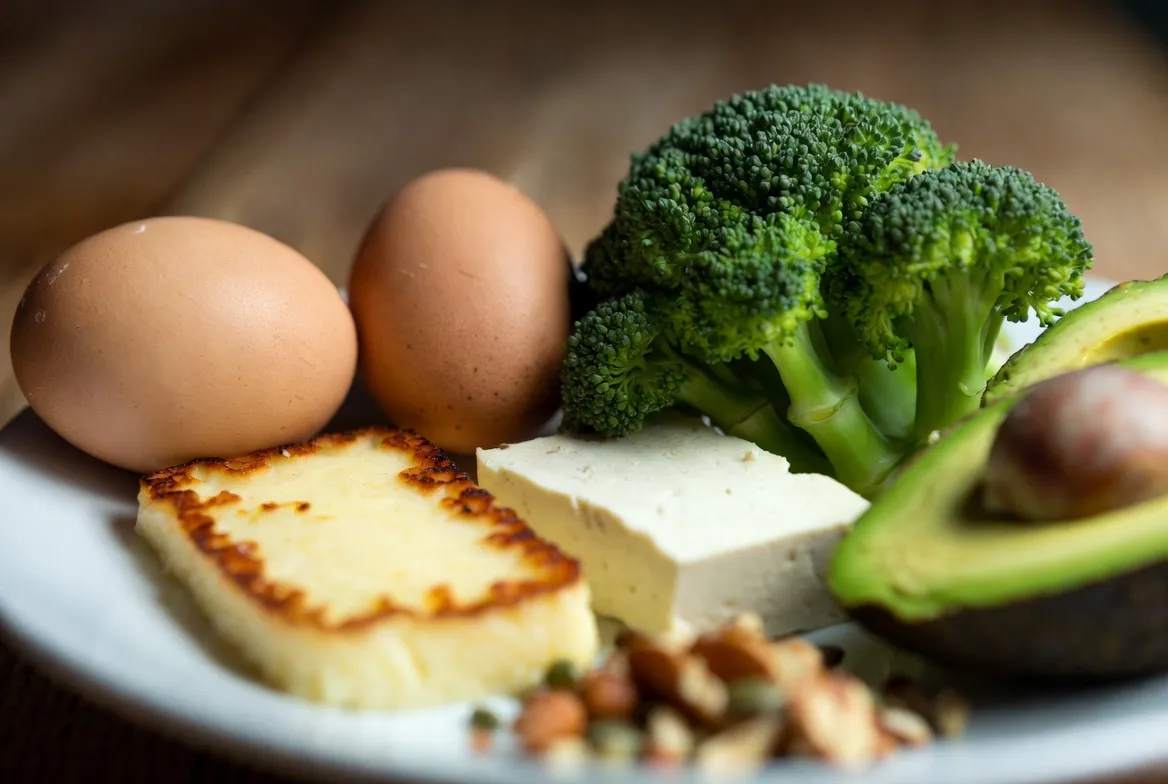
Low-Carb for Vegetarians: A Complete UK Guide (2026)
A practical, evidence-based guide to low-carb eating for vegetarians in the UK — covering protein sources, the legume challenge, meal planning at different carb thresholds, and key supplements.
Published Updated
Note: This guide is written for lacto-ovo vegetarians — people who eat eggs and dairy but not meat or fish. If you are vegan, the protein and supplement landscape is significantly more challenging; some sections will apply but the dairy-focused recommendations will not.
Low-carb eating and vegetarianism pull in opposite directions on paper. Traditional vegetarian diets rely heavily on legumes, grains, and root vegetables — precisely the foods a low-carb approach restricts most. But the tension is resolvable, particularly for lacto-ovo vegetarians who include eggs and dairy. This guide explains how.
The honest caveat upfront: the clinical evidence base for low-carb vegetarian diets is thinner than for omnivorous low-carb approaches. Most low-carb trials use animal-heavy protocols; most plant-based trials use high-carbohydrate designs. Where evidence is genuinely limited, this guide says so rather than overstating it.
The protein challenge: why vegetarian low-carb is harder than it looks
The fundamental problem is biochemical. In animal tissue, protein is stored alongside water and fat, with almost no carbohydrates. In the plant kingdom, particularly legumes, protein is packaged with substantial quantities of starch.
The numbers make the challenge clear. Cooked lentils provide roughly 8.8g of protein per 100g — but they come with 16.9g of carbohydrates. To hit a muscle-sparing 30g of protein from lentils in one meal, you’d consume over 57g of carbohydrates — potentially your entire daily allowance on a strict low-carb protocol.
This is what nutritional researchers call the legume problem: relying on beans, lentils, and chickpeas as primary protein sources makes it mathematically very difficult to stay below 130g of carbohydrates per day, let alone the 50g threshold of a ketogenic approach.
The most common error when transitioning to vegetarian low-carb is eliminating bread, pasta, and refined sugar, but continuing to eat large unrestricted portions of dal, bean chilli, and lentil soup — foods widely considered healthy and “low GI” but carrying an aggregate carbohydrate load that silently pushes daily intake past 150–200g.
Genuine low-carb plant proteins
The solution is to pivot toward plant proteins that are either naturally low in carbohydrates or have been processed to remove their starch fraction.
| Protein source | Protein per 100g | Net carbs per 100g | Where to Buy | Notes |
|---|---|---|---|---|
| Seitan | 75g | ~14g | Holland & Barrett, Amazon UK | ⚠️ Pure wheat gluten — entirely unsafe for anyone with coeliac disease or gluten sensitivity |
| Tempeh | 19–22g | 1–5g | Tesco, Sainsbury’s, Ocado (Tofoo Co.) | Fermented soya, excellent bioavailability, holds texture under high heat |
| Firm tofu | 13–16g | 1–2g | Most supermarkets (Cauldron, Tofoo Co.) | Virtually zero carbs, calcium-rich when set with calcium sulphate |
| Silken tofu | ~5g | 1.5–2g | Most supermarkets | Lower density, best for sauces and dessert bases |
| Lupin flour | 40g | ~1g net | Amazon UK | Most carbs are indigestible fibre; exceptional net carb profile |
| Hemp seeds | 32g | 6–8g | Most supermarkets, Holland & Barrett | Complete amino acid profile, excellent omega-6:3 ratio |
| Edamame | ~11g | ~10g | Most supermarkets (frozen aisle) | Higher carbs than processed soya, but strong fibre content blunts the response |
Spirulina is sometimes promoted as a high-protein superfood (57g protein per 100g), but a realistic serving is 5–10g of powder — yielding barely 3–5g of actual protein per use. It’s nutritionally irrelevant as a meaningful protein source.
Why eggs and dairy become even more important
For lacto-ovo vegetarians, eggs and full-fat dairy are not optional extras — they are the metabolic foundation of the diet.
Plant proteins are typically 10–20% less digestible than animal proteins, partly because they’re encased in fibrous plant cell walls and partly because of anti-nutrients (phytates, tannins, trypsin inhibitors) that impede enzymatic breakdown. Most plant proteins are also incomplete, missing one or more essential amino acids.
Eggs and dairy, by contrast, have a Protein Digestibility Corrected Amino Acid Score (PDCAAS) of 1.0 — the maximum possible. They deliver complete, highly bioavailable protein with effectively zero carbohydrates.
Full-fat dairy also provides the dietary fat that makes low-carb eating satiating and sustainable. Removing fat from this equation — whether out of habit or residual fat-phobia from 1990s dietary advice — leaves a diet that is simultaneously low in carbohydrates and low in fat, which is a fast track to intense hunger and dietary failure. Butter, cream, olive oil, and avocado oil need to be deliberately added to meals to replace the caloric role that carbohydrates previously played.
A 2025 randomised trial from the University of Reading and the Madras Diabetes Research Foundation compared lacto-vegetarian and vegan diets matched for total calories, protein, and carbohydrates. Using continuous glucose monitoring over 14 days, the lacto-vegetarian group showed significantly lower blood glucose and better glycaemic stability. The researchers identified elevated acetyl carnitine — a compound found in dairy — as a key mechanism, facilitating fatty acid oxidation and reducing metabolic stress. This provides direct clinical support for keeping full-fat dairy central to the diet rather than minimising it.
Protein targets
The UK Reference Nutrient Intake (RNI) for protein is 0.75g per kilogram of body weight per day. For a 75kg adult this is 56g; for a 60kg adult, 45g.
For low-carb vegetarians these figures need adjusting upward. Due to reduced plant protein bioavailability and the increased gluconeogenic demand of carbohydrate restriction (where the body converts amino acids to glucose), most practitioners recommend targeting 1.0–1.2g of protein per kilogram of body weight per day. This is also the recommended range for adults over 50 to counter the natural blunting of muscle protein synthesis that comes with age.
What the evidence actually shows
The Eco-Atkins model
The foundational clinical model for low-carb plant-based eating is the Eco-Atkins diet, developed by Dr David Jenkins at the University of Toronto. It replaces high-carbohydrate staples with plant proteins (primarily soya and vital wheat gluten), viscous fibres, and unsaturated fats from nuts and seeds.
Follow-up studies and systematic reviews through 2022–2024 consistently show that Eco-Atkins outperforms high-carbohydrate low-fat vegetarian diets on lipid profiles — producing meaningful reductions in LDL cholesterol, total cholesterol, apolipoprotein B, and body mass. The cardioprotective case is solid.
The real-world limitation is adherence. Studies consistently show that compliance beyond 6–12 months is poor. Eliminating both meat and high-carbohydrate comfort foods simultaneously is a demanding constraint that most people find socially and psychologically difficult to sustain without ongoing clinical support.
Cardiovascular and mortality outcomes
A 2023 systematic review and meta-analysis of over 421,000 participants found that animal-based low-carbohydrate diets were associated with slight increases in overall and cardiovascular mortality, while plant-based low-carbohydrate dietary patterns showed neutral or protective effects. For vegetarians, this is reassuring: the metabolic benefits of carbohydrate restriction appear to be maintained without the mortality signals associated with heavy red meat consumption.
Type 2 diabetes
A 2025 systematic review and meta-analysis confirmed that vegetarian dietary patterns reduce HbA1c by an average of 0.40% and significantly reduce BMI in adults with Type 2 diabetes, compared to non-vegetarian diets. The combination of vegetarianism with carbohydrate restriction appears to be a particularly potent intervention for insulin resistance and metabolic syndrome.
UK food guide: what to eat
Eggs
The most versatile, affordable, and nutritionally complete food in the vegetarian low-carb diet. Standard free-range large eggs provide approximately 6–7g of protein each with trace carbohydrates.
Worth knowing about omega-3 enriched eggs: Hens fed a flaxseed and marine algae diet produce eggs with up to five times the omega-3 content of conventional eggs. For a vegetarian who doesn’t eat fish, these are a meaningful dietary source of fatty acids. Look for the Columbus brand or supermarket own-brand omega-3 eggs. Clarence Court Burford Browns are excellent for cooking quality but don’t offer a notable nutritional advantage over standard free-range eggs at their significant price premium.
Full-fat dairy
| Product | Protein/100g | Carbs/100g | Where to Buy | Notes |
|---|---|---|---|---|
| Cheddar (extra mature) | 25g | Trace | Most supermarkets | The everyday staple. Stronger flavour means smaller portions |
| Parmesan | ~35g | ~3g | Most supermarkets | Dense umami reduces need for high-carb condiments |
| Gruyère | ~30g | 0.4g | Most supermarkets | Excellent for gratins and baked dishes |
| Brie / Camembert | 21g | Trace | Most supermarkets | Good fat sources, highly palatable |
| Goat’s cheese | ~15g | ~3g | Most supermarkets | More digestible for those with mild dairy sensitivity |
| Greek yogurt (full-fat) | 9–10g | 3–4g | Most supermarkets | Must be genuine strained Greek yogurt (Fage Total 5% is the benchmark) — not “Greek-style” which is thickened with starch |
| Double cream | 1.5g | 1.6g | Most supermarkets | Use for sauces, coffee, desserts; no meaningful carb load per serving |
| Mascarpone | ~4g | ~3g | Most supermarkets | Very high fat, low protein; ideal base for low-carb desserts |
Low-carb vegetables
All figures are per 100g raw weight.
| Vegetable | Net carbs | Where to Buy | Notes |
|---|---|---|---|
| Spinach | 1.1g/100g | Most supermarkets | High magnesium, folate, potassium. Shrinks dramatically when cooked |
| Courgette | 2.1g/100g | Most supermarkets | Spiralises into effective pasta substitute |
| Cauliflower | 3g/100g | Most supermarkets | Mash, rice, gratin, pizza base — the most versatile low-carb vegetable |
| Broccoli | 4g/100g | Most supermarkets | Higher protein than most vegetables, good roast/steam performance |
| Mushrooms | 2–3g/100g | Most supermarkets | High umami, useful for savouriness in meat-free cooking |
| Aubergine | ~6g/100g | Most supermarkets | Higher carb than leafy greens but still workable in moderate portions |
| Peppers | 4–6g/100g | Most supermarkets | Use for flavour and colour, not as a bulk base |
| Green beans | ~4g/100g | Most supermarkets | Good warm side dish, moderate carb |
| Asparagus | ~2g/100g | Most supermarkets | Seasonal but excellent with butter, eggs, and hard cheese |
Avocado (technically a fruit) deserves a mention: approximately 2g net carbs per 100g with 15g of fat — one of the most valuable foods in this dietary pattern.
Nuts and seeds
| Item | Protein/100g | Net carbs/100g | Where to Buy / UK Notes |
|---|---|---|---|
| Hemp seeds | 32g | 6–8g | Complete amino acid profile (Linwoods widely stocked) |
| Chia seeds | 16g | ~2.5g | Forms gel in liquid; useful as egg substitute in baking |
| Milled flaxseed | 18g | ~2g | Must be milled, not whole; high ALA omega-3 |
| Almonds | 21g | ~5g | Also the primary flour substitute for low-carb baking |
| Walnuts | 15g | ~3.5g | High in polyunsaturated fats |
| Pumpkin seeds | 18.5g | ~15g | One of the best plant sources of zinc |
The chia, almond and walnut figures are taken from UK supermarket labels verified against manufacturer data (July 2026) — noticeably lower than the US-derived numbers on American keto sites, because UK labels already exclude fibre.
UK supermarket convenience products: what works and what doesn’t
Quorn: Mycoprotein (fungi-derived) is inherently low-carb and high in fibre.
| Product | Brand | Protein/100g | Carbs/100g | Where to Buy | Notes |
|---|---|---|---|---|---|
| Quorn Mince | Quorn | 16g | 2.6g | Most supermarkets | Mycoprotein-based |
| Quorn Pieces | Quorn | 14g | 4.2g | Most supermarkets | Mycoprotein-based; slightly higher carbs than the mince |
| Naked Extra Firm Tofu | Tofoo Co. | ~16g | ~1g | Tesco, Sainsbury’s, Ocado | — |
| Tempeh | Tofoo Co. | 22.2g | 1.0g | Tesco, Sainsbury’s, Ocado | Exceptional protein |
| Organic Firm Tofu | Cauldron | 13g | 1.0g | Most supermarkets | — |
| PlantLiving Organic Firm Tofu | Waitrose | 12.6g | 1.7g | Waitrose | — |
| Plant Kitchen Super Firm Tofu | M&S | 12.6g | 1.2g | M&S | Verified against manufacturer data |
- ❌ All breaded Quorn products (Crispy Nuggets, Escalopes, etc.): wheat flour coatings push carbs to 18g+ per 100g. Avoid entirely.
Seeds of Change: Actively avoid despite the health-halo branding. Their Quinoa & Brown Rice pouches contain 47–53g of carbohydrates per serving. “Wholesome” and “organic” on the packaging does not mean low-carb.
Any heavily processed vegan meat alternative (most plant-based sausages, burgers, mince) — check the label before assuming. Most use potato starch, tapioca flour, or wheat rusk as binders, pushing carbs well above what the protein content would suggest.
Meal planning: three carb thresholds
50g per day — ketogenic / very low carb
All grains, legumes, root vegetables, and most fruit eliminated. Nutritional ketosis is the target.
- Breakfast: 3-egg omelette in butter with 30g mature cheddar and wilted spinach. (~3g carbs)
- Lunch: Large dark-leaf salad with cucumber, half an avocado, 100g pan-fried halloumi, dressed with olive oil and cider vinegar. (~8g carbs)
- Dinner: 150g firm tofu stir-fried with broccoli and courgette noodles in sesame oil, ginger, garlic, and tamari. (~12g carbs)
- Snack: 30g walnuts or almonds. (~3g carbs)
- Daily total: ~26g, with buffer for incidental carbs in spices and vegetables.
100g per day — moderate low carb
More vegetable variety, small amounts of low-GI fruit, and occasionally a measured portion of legumes become workable.
- Breakfast: 150g full-fat Greek yogurt with 20g chia seeds, 20g milled flaxseed, 50g raspberries. (~15g carbs)
- Lunch: 2 hard-boiled eggs, 50g brie, celery, cherry tomatoes, 100g cold Quorn pieces. (~10g carbs)
- Dinner: Aubergine and mushroom moussaka with Quorn mince, low-sugar passata, ricotta and parmesan crust. (~25g carbs)
- Daily total: ~50–60g, with generous headroom.
130g per day — liberal low carb
The upper limit of the BDA’s definition. Maximum flexibility; small portions of complex carbohydrates can return.
- Breakfast: 2 slices low-carb bread (almond/lupin flour based) toasted with butter and 3 scrambled eggs. (~15g carbs)
- Lunch: Measured 50g chickpeas with 100g pan-fried tempeh, crumbled feta, roasted peppers, olive oil. (~30g carbs)
- Dinner: Paneer and cauliflower curry in spiced coconut milk and tomato sauce, with cauliflower rice. (~20g carbs)
- Daily total: ~65g — comfortable headroom below the 130g ceiling, allowing for a glass of dry wine or an extra portion of vegetables.
The four biggest pitfalls
1. The legume trap. Successfully eliminating bread and pasta but continuing large unrestricted portions of dal or bean chilli. These foods carry a significant carbohydrate load even in moderate quantities.
2. The convenience product illusion. Assuming “plant-based” equals low-carb. Read every label. Most vegan meat alternatives use high-GI starches as binders.
3. Insufficient fat intake. Tofu, Quorn, and seitan are almost entirely fat-free. Without deliberately adding butter, olive oil, cream, avocado, or full-fat dairy to meals, you end up with a diet that is low in carbohydrates AND low in fat — which is exhausting and unsustainable.
4. Electrolyte depletion. When carbohydrate intake drops, insulin falls and the kidneys excrete sodium rapidly. The resulting “keto flu” (headaches, fatigue, cramps) can often be resolved simply by salting food more liberally and ensuring adequate fluid intake.
UK resources worth knowing about
Freshwell Low Carb Project — An NHS-backed initiative from a GP surgery in Essex. They offer a free, structured Low Carb Vegetarian Meal Planner specifically designed for UK supermarket availability.
May Simpkin — A UK registered nutritional therapist with targeted low-carb vegetarian guides and practical everyday recipes.
Supplements to consider
The combination of vegetarianism and carbohydrate restriction limits access to several nutrients simultaneously. Fortified cereals and grains (cut by the low-carb approach) and animal products (cut by vegetarianism) overlap more than most people realise.
Vitamin B12
B12 is produced exclusively by bacteria in animal digestive tracts and is absent from unfortified plant foods. Lacto-ovo vegetarians can get it from eggs and dairy, but the reduced overall food volume of a satiating low-carb diet may push intake below optimal levels. Deficiency causes macrocytic anaemia, neurological damage, and elevated homocysteine — a cardiovascular risk marker.
Look for methylcobalamin rather than cyanocobalamin; methylcobalamin is the active form and does not require liver conversion. High-strength options (1000mcg) are available from brands such as ZipVit and Vitabright, and Holland & Barrett stock reliable slow-release variants.
Algae-based omega-3 (EPA and DHA)
Vegetarians typically get plenty of ALA (short-chain omega-3) from flaxseed and walnuts, but the human body’s conversion of ALA to the long-chain EPA and DHA is severely limited — often below 5%. EPA and DHA are the forms needed for cardiovascular protection, inflammation resolution, and cognitive function.
Algae is the original source of omega-3 in the food chain (fish accumulate it by eating algae). Algal oil gives you direct EPA/DHA without the fish. Together Health Omega-3 Algae Softgels are well-regarded in the UK and available at Holland & Barrett and Superdrug.
Zinc
Low-carb vegetarian staples like pumpkin seeds, hemp seeds, and dairy contain zinc, but phytic acid in all plant seeds and nuts binds to zinc in the gut and blocks absorption. Vegetarians consistently show lower zinc status than omnivores regardless of intake.
Avoid cheap zinc oxide. Look for chelated forms — zinc picolinate, zinc citrate, or zinc bisglycinate — which absorb significantly better. UK brands Vitabright and Nutrition Geeks offer well-formulated options.
Vitamin D3
The UK sits at a latitude where UVB radiation is insufficient for skin D3 synthesis from October to March. The NHS already advises all UK residents to consider a 10mcg (400 IU) supplement in autumn and winter. For vegetarians who don’t eat oily fish, year-round supplementation is often warranted.
D3 (cholecalciferol) is significantly more effective at raising blood levels than D2 (ergocalciferol). Traditional D3 is derived from sheep’s lanolin (vegetarian-suitable). Plant-based D3 from lichen is also widely available for those who prefer it. Both are readily available at Boots, Superdrug, and supermarkets.
Creatine monohydrate
Creatine is found almost exclusively in animal muscle tissue, so vegetarians have significantly lower muscle and brain creatine stores than omnivores. It’s not just a gym supplement — emerging research from 2020–2025 shows that supplementing with 5–8g daily significantly reduces mental fatigue, improves working memory, and enhances cognitive performance under load. Crucially, these neurological benefits are most pronounced in vegetarians precisely because their baseline creatine levels are lower.
Creatine monohydrate is one of the most extensively researched and consistently safe supplements available. Myprotein, USN, and Optimum Nutrition all offer unflavoured bulk powders that dissolve easily into yogurt or water. Buy a standard unflavoured tub — it provides several months of daily use and is one of the cheapest supplements per serving.
This guide will be updated as new evidence emerges. Content reflects the state of UK clinical guidance and published research as of early 2026. Product macro figures we could match to manufacturer data on Open Food Facts (Quorn, M&S tofu, Fage, cream, nuts and seeds) were re-verified in July 2026; always check the physical label, as manufacturers reformulate without notice.