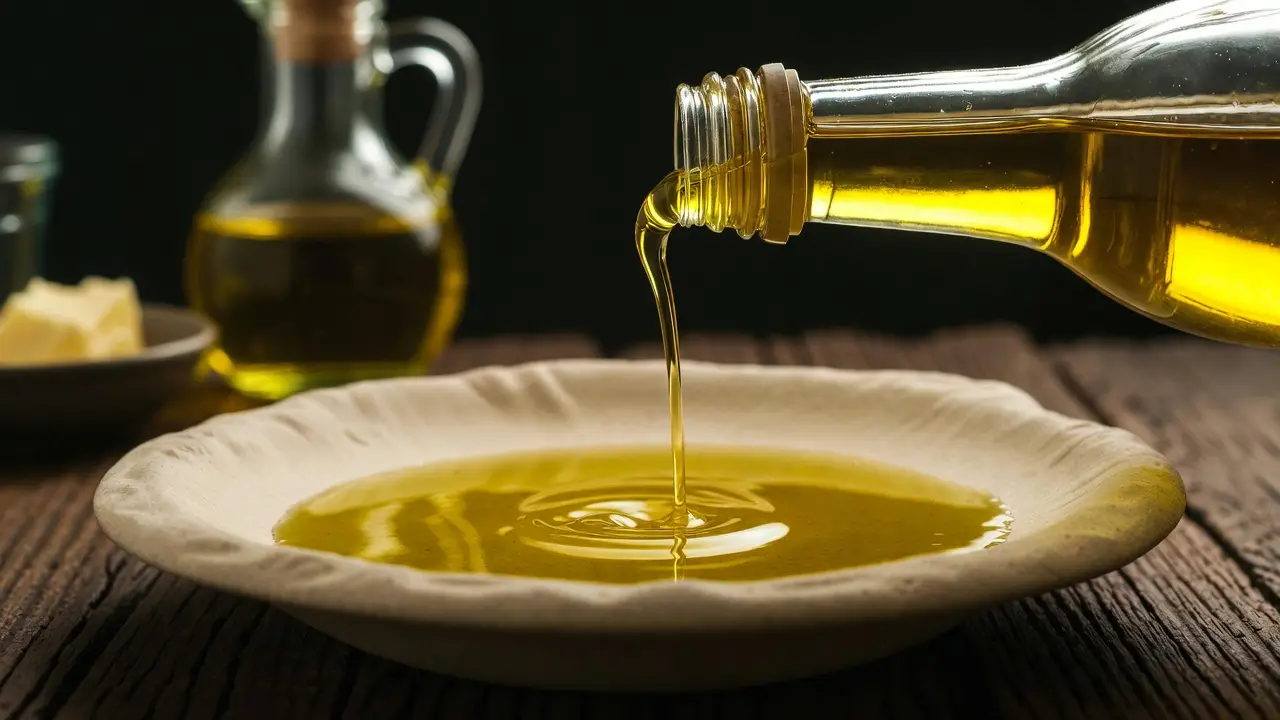
Vegetable oil, sunflower oil, rapeseed oil — they're in almost everything. Here's why that's a problem, and what to use instead.
On this page
What are seed oils?
Seed oils (often marketed under the generic name "vegetable oil") are oils extracted from the seeds of plants rather than from whole fruits (like olives or avocados) or animal fats. Common examples you'll find in UK supermarkets include sunflower, rapeseed (often called canola internationally), soybean, corn, and grapeseed oils.
Unlike butter or olive oil, which can be produced by simple churning or pressing, seed oils require an industrial process to extract. This involves high heat, chemical solvents like hexane, and multiple refining steps including bleaching and deodorisation. By the time it reaches your pan, the oil has been through a process far removed from the natural source.
Why are they a problem?
There are two primary concerns with seed oils: their high concentration of linoleic acid (an omega-6 fatty acid) and their inherent instability. Linoleic acid is a polyunsaturated fatty acid (PUFA). While we need small amounts of it, the modern diet provides it in massive, unnatural quantities.
PUFAs are chemically unstable because they have multiple double bonds in their structure. This means they oxidise easily when exposed to heat, light, or air. When you heat sunflower oil in a frying pan, it begins to break down into inflammatory compounds called aldehydes. Consuming these oxidised fats regularly triggers systemic inflammation, which is a driver for many modern chronic diseases.
The omega-6 to omega-3 ratio
Humans evolved eating a diet where omega-6 and omega-3 fats were consumed in roughly equal measure — a 1:1 ratio. Modern Western diets, largely due to the dominance of seed oils in processed foods and restaurant cooking, have pushed that ratio to somewhere between 15:1 and 20:1.
This chronic imbalance keeps the body in a pro-inflammatory state. While a low-carb diet naturally improves your health by reducing insulin, you only get the full benefit if you also address the quality of the fats you are using to replace those carbs.
What about "heart healthy" claims?
You'll still see "heart healthy" labels on bottles of rapeseed and sunflower oil. This guidance stems from observational studies in the 1960s and 70s that showed replacing saturated fat with polyunsaturated fat lowered LDL cholesterol. For decades, it was assumed that lowering LDL automatically meant fewer heart attacks.
However, more recent analysis of controlled trials — including the Sydney Diet Heart Study and the Minnesota Coronary Experiment — found that while LDL did indeed fall when people switched to vegetable oils, the risk of death from heart disease actually stayed the same or even increased. It is an active and often heated area of research, but for many in the low-carb community, the evidence for avoiding these highly processed, unstable oils is compelling.
Seed oils and low-carb eating
When you switch to a low-carb or keto way of eating, you naturally increase your fat consumption. Fat becomes your primary fuel source. This makes the quality of that fat more important than ever.
Cooking with oxidised seed oils while your body is trying to heal its metabolism is like trying to put fire out with petrol. Combining a high-fat intake with unstable, inflammatory PUFAs is potentially more damaging than a standard high-carb diet. If you're going to eat more fat, it must be the right kind of fat.
Oils to avoid
- ✗ Sunflower oil
- ✗ Vegetable oil
- ✗ Rapeseed / Canola oil
- ✗ Soybean oil
- ✗ Corn oil
- ✗ Cottonseed oil
- ✗ Safflower oil
- ✗ Grapeseed oil
- ✗ Rice bran oil
- ✗ Margarine & low-fat spreads
Oils to use instead
Affiliate disclosure: Some links below are Amazon affiliate links (Ad). We may earn a small commission if you purchase through them, at no extra cost to you.
- ✓Extra virgin olive oil: Best for dressings and low-to-medium heat cooking. Rich in stable monounsaturated fats. I buy the Odysea Kalamata EVOO in a 5-litre tin (Ad) — better value per litre and the tin protects from light degradation.
- ✓Butter and ghee: Highly stable at high temperatures. Ghee (clarified butter) is perfect for frying — the milk solids are removed so it has a higher smoke point than butter and suits anyone sensitive to dairy. I use Hunter & Gather organic ghee (Ad) from grass-fed British cows.
- ✓Coconut oil: Excellent for Asian-style cooking and very resistant to oxidation.
- ✓Beef tallow and lard: The traditional British cooking fats — extremely stable at high heat and making a well-deserved comeback. Hunter & Gather organic beef tallow (Ad) from grass-fed British cattle is single-ingredient, clean, and excellent for roasting and frying.
- ✓Avocado oil: Neutral flavour and a very high smoke point. Ideal for making homemade mayo.
Hidden seed oils in processed food
Once you start reading labels, you'll realise that seed oils are everywhere. They are the base for almost every supermarket mayonnaise, salad dressing, and pesto. They are in protein bars, crisps, biscuits, and even "healthy" nut butters.
One of the easiest wins for your health (and your wallet) is making your own mayonnaise. Standard supermarket mayo is almost 80% rapeseed or sunflower oil. We've done the maths on this: making your own mayo costs a fraction of the price of premium brands.
Eating out in the UK
Restaurants almost universally use rapeseed or sunflower oil because it's cheap and has a high smoke point. Choose grilled meats over fried ones, and avoid anything battered or deep-fried. Ask for extra virgin olive oil and vinegar for your salad rather than the "house dressing." While chains like Nando's or Wagamama provide allergen info, they rarely specify the oil type, so sticking to simple, grilled options is always the safest bet.
Practical tips for avoiding seed oils
- Audit your kitchen: Clear out the sunflower, vegetable, and rapeseed oils. Replace them with butter, olive oil, and coconut oil.
- Read every label: Make "no seed oils" a non-negotiable rule when buying packaged food. If it contains vegetable oil, put it back.
- Buy butter in bulk: It keeps for a long time and is significantly cheaper per kilogram when bought in larger packs from shops like Aldi or Lidl.
- Make your own: Dressings and mayonnaise take minutes to make and allow you to control exactly what goes into your body.
A Note on Research
The relationship between dietary fat, seed oils, and health is an active area of scientific research. This article presents one perspective informed by emerging research. It is not medical advice. If you have cardiovascular disease or high cholesterol, discuss dietary fat choices with your GP or a registered dietitian.
Recommended Cooking Fats
(Ad)Hunter & Gather Organic Ghee 450g
Certified organic, grass-fed British cows. Our top pick for high-heat cooking on low-carb.
(Ad)Hunter & Gather Organic Beef Tallow 450g
Single-ingredient rendered beef fat in a glass jar. Excellent for roasting and frying.
(Ad)Odysea Kalamata Extra Virgin Olive Oil 5L
PDO Kalamata designation. The 5L tin is outstanding value for daily low-carb cooking.