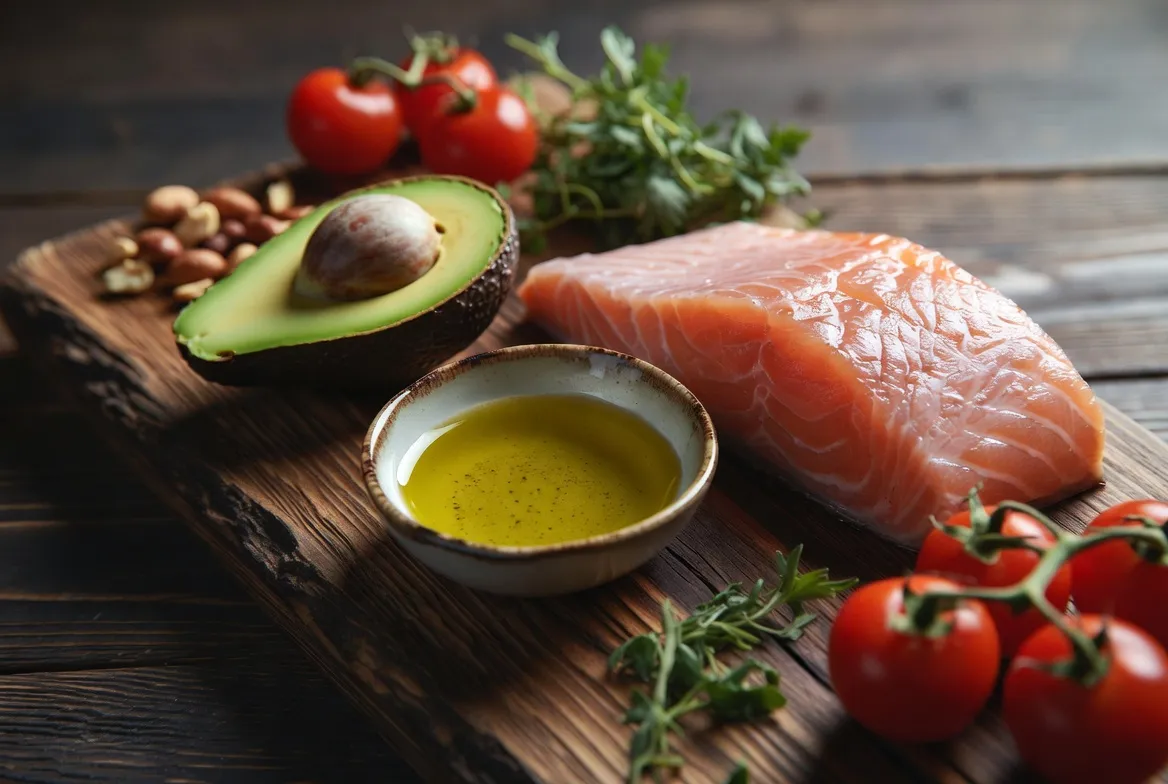
Mediterranean Keto for Menopause: Balancing Hormones Without Extreme Restriction
Extreme carbohydrate restriction can sometimes backfire during menopause by increasing cortisol and stressing the thyroid. Discover why a Mediterranean Keto approach offers a more sustainable and hormone-friendly way to manage midlife metabolic changes.
Published
Important: The information in this article is for educational purposes only and does not constitute medical advice. If you are experiencing perimenopausal or menopausal symptoms, or are considering significant dietary changes, please consult your GP or a registered healthcare professional before proceeding.
If you’ve hit your mid-40s or 50s and suddenly feel like your body is playing by a completely different set of rules, you are not alone. You might be eating the exact same meals and doing the exact same workouts, yet the scales are creeping up — especially around your middle. Welcome to the metabolic shifts of perimenopause and menopause.
As your oestrogen levels naturally begin to decline, your body loses one of its most powerful metabolic protectors.1 This drop can increase vulnerability to insulin resistance, meaning your cells may struggle to process carbohydrates as efficiently as they once did.2 The result for many women: stubborn weight gain, unexpected energy crashes, and frustrating brain fog.
Many women searching for the best diet for perimenopause encounter the ketogenic (keto) diet. While low-carb approaches have genuine evidence behind them, some research suggests that a very strict keto approach may not suit everyone during menopause.3
Here we explore why the Mediterranean Keto approach — combining low-carb principles with Mediterranean dietary patterns — may offer a more sustainable and balanced strategy for many women navigating midlife metabolic changes.
The Potential Drawbacks of Very Strict Keto During Menopause
The traditional keto diet involves very high fat, moderate protein, and minimal carbohydrates. While it can effectively lower insulin levels, some research suggests it may place additional physiological demands on a menopausal body that is already navigating significant hormonal changes.1
Cortisol and Abdominal Fat
When carbohydrate intake drops sharply, some individuals experience an increase in cortisol — the body’s primary stress hormone — as the body adjusts to using fat for fuel.4
Prolonged elevated cortisol can disrupt sleep, increase anxiety, and may promote visceral fat storage around the abdomen.3 For women already prone to these symptoms during menopause, this is worth bearing in mind when considering a very restrictive approach.
Thyroid Function
Your thyroid gland plays a central role in regulating metabolism, body temperature, and energy. Some research has found that very low carbohydrate diets can affect thyroid hormone levels, particularly active T3.5 This is an area of ongoing research and individual responses vary considerably. If you have a thyroid condition, discuss any significant dietary changes with your GP before starting.
Hair and Nutrient Considerations
Some women following very restrictive keto diets report increased hair shedding, a condition known as telogen effluvium.7 This is thought to relate to nutritional stress and potential deficiencies in biotin, zinc, and iron when entire food groups are eliminated.8 A more moderate, varied low-carb approach reduces this risk.
The Mediterranean Hybrid: A More Balanced Approach
The Mediterranean Keto approach combines the insulin-lowering benefits of reducing refined carbohydrates with the well-established benefits of the Mediterranean diet — which the British Menopause Society and NHS both recommend for long-term health during and after menopause.
Rather than eliminating all carbohydrates, this approach prioritises healthy unsaturated fats, high-quality proteins, and abundant plant-based foods, while reducing processed carbohydrates and added sugars.
Healthy Fats for Cardiovascular Protection
After menopause, declining oestrogen increases cardiovascular risk.10 Replacing highly processed fats with extra virgin olive oil, avocados, olives, nuts, and seeds supports heart health and helps reduce inflammation — a core principle of both Mediterranean eating and NHS dietary guidance.
Oily Fish and Omega-3s
Regular consumption of oily fish — mackerel, sardines, herring, salmon — provides marine omega-3 fatty acids (EPA and DHA) with well-documented anti-inflammatory properties. The NHS recommends at least two portions of fish per week, with at least one oily,13 and some research suggests omega-3s may help moderate the severity of vasomotor symptoms such as hot flushes.12
Gut Health and Fibre
A diverse gut microbiome supports general health and may play a role in oestrogen metabolism through what researchers call the “oestrobolome” — gut bacteria involved in processing oestrogen.14,15 Dietary fibre feeds beneficial gut bacteria, and very low-carb diets that drastically restrict fibre intake may adversely affect microbiome diversity over time.9
Maintaining good fibre intake is straightforward on a Mediterranean Keto approach through low-carb vegetables, nuts, seeds, and legumes in moderation.
The 30-Plant Challenge
Research from the American Gut Project found that people eating 30 or more different plant varieties per week tended to have greater microbiome diversity. Hitting 30 plants on a low-carb approach is more achievable than it sounds — nuts, seeds, herbs, and spices all count towards your total.18
Here is how to stock your kitchen for a gut-friendly Mediterranean Keto approach:
- Cruciferous and leafy greens: Broccoli, cauliflower, spinach, kale, and cabbage. Rich in fibre and compounds that support liver function.19
- Low-carb vegetables: Courgettes, green beans, cucumber, celery, and bell peppers. Hydrating and low in sugar.19
- Nuts and seeds: Chia seeds, flaxseeds, pumpkin seeds, walnuts, and almonds. Flaxseeds contain phytoestrogens that some research links to hormonal balance.12,20
- Low-sugar berries: Raspberries, blackberries, and strawberries provide fibre and antioxidants with a modest carb count.19
- Herbs and spices: Turmeric, ginger, basil, rosemary, and cinnamon add flavour and provide additional plant variety.18
Conclusion: A Nourishing, Sustainable Approach
Navigating the metabolic changes of perimenopause and menopause is genuinely challenging, and there is no single dietary approach that works for every woman. The Mediterranean Keto approach — reducing refined carbohydrates while emphasising whole foods, healthy fats, and plant diversity — aligns with the evidence-based guidance from both the British Menopause Society and the NHS, and may offer a more sustainable path than very strict keto for many women.
If you are considering significant dietary changes during menopause, please speak with your GP or a registered dietitian who can provide personalised advice based on your health history.
Works cited
- The Truth About Keto And Menopause, accessed March 5, 2026, https://drannacabeca.com/blogs/keto-green-diet/keto-and-menopause
- Is the Keto Diet Good for Menopausal People? — Healthline, accessed March 5, 2026, https://www.healthline.com/nutrition/keto-and-menopause
- Women, Food, and Hormones — Sara Gottfried, accessed March 5, 2026, https://www.saragottfriedmd.com/women-food-and-hormones-why-keto-doesnt-work-for-all-women/
- The Keto Diet and Women’s Hormones — Rupa Health, accessed March 5, 2026, https://www.rupahealth.com/post/the-keto-diet-and-womens-hormones-a-functional-medicine-approach
- Ketogenic diet and thyroid function — PMC, accessed March 5, 2026, https://pmc.ncbi.nlm.nih.gov/articles/PMC9165850/
- Keto and Hormonal Health — Ubie, accessed March 5, 2026, https://ubiehealth.com/doctors-note/metabolic-flexibility-keto-warning-hormonal-59-fit21e2
- Keto and Hair Loss — Wimpole Clinic, accessed March 5, 2026, https://wimpoleclinic.com/blog/keto-hair/
- Keto Diet and Hair Loss — The Independent Pharmacy, accessed March 5, 2026, https://www.theindependentpharmacy.co.uk/hair-loss/guides/keto-and-hair-loss-tips-for-hair-regrowth
- Keto Diet and Menopause Weight Gain — Everyday Health, accessed March 5, 2026, https://www.everydayhealth.com/menopause/the-keto-diet-and-menopause-what-you-need-to-know/
- Menopause: Nutrition and Weight Gain — British Menopause Society, accessed March 5, 2026, https://thebms.org.uk/wp-content/uploads/2023/06/19-BMS-TfC-Menopause-Nutrition-and-Weight-Gain-JUNE2023-A.pdf
- What counts as oily fish — BHF, accessed March 5, 2026, https://www.bhf.org.uk/informationsupport/heart-matters-magazine/nutrition/oily-fish
- Mediterranean Diet and Women’s Health, accessed March 5, 2026, https://mowisalmon.us/food-for-hormone-balance-how-the-mediterranean-diet-supports-womens-health/
- Fish and shellfish — NHS, accessed March 5, 2026, https://www.nhs.uk/live-well/eat-well/food-types/fish-and-shellfish-nutrition/
- Gut health and menopause — The Pause Life, accessed March 5, 2026, https://thepauselife.com/blogs/the-pause-blog/30-plant-challenge-why-gut-health-matters-more-after-40
- Gut Microbiome in Menopause — PMC, accessed March 5, 2026, https://pmc.ncbi.nlm.nih.gov/articles/PMC9379122/
- High-Fiber Foods — ZOE, accessed March 5, 2026, https://zoe.com/learn/high-fiber-foods
- Dietary Patterns and Gut Microbiome — MDPI, accessed March 5, 2026, https://www.mdpi.com/2072-6643/15/22/4704
- Eating 30 Plants per Week — ZOE, accessed March 5, 2026, https://zoe.com/learn/30-plants-per-week
- The 30 Plant Foods Challenge, accessed March 5, 2026, https://ltbbodawa-nsn.gov/wp-content/uploads/2021/07/The-30-Different-Plant-Based-Foods-Per-Week-Challenge.pdf
- Eating well for perimenopause and menopause — BDA, accessed March 5, 2026, https://www.bda.uk.com/resource/menopause-diet.html
Content is for informational purposes only and does not constitute medical advice. Always consult your GP or a registered healthcare professional before making significant dietary changes, especially if you have a medical condition.