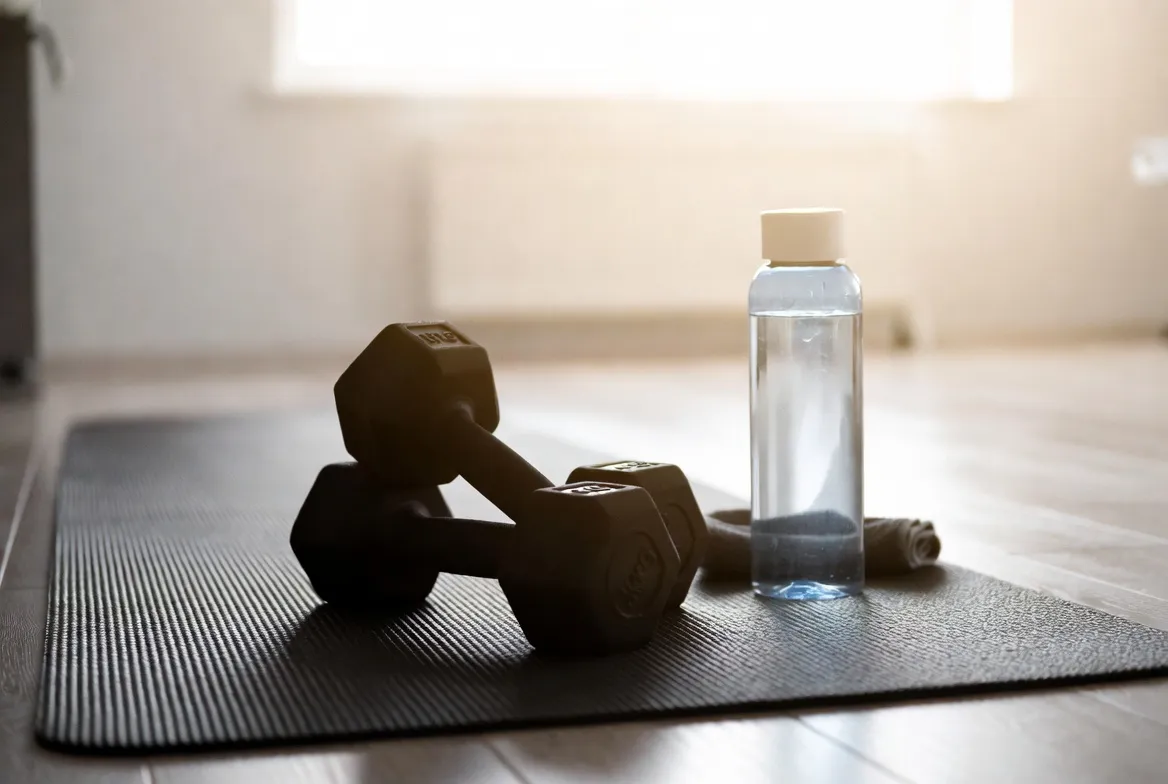
Strength Training for Menopause: A Beginner's Guide to Building Muscle and Bone
Why lifting weights is essential during menopause, how resistance training tackles visceral belly fat and bone loss, and how to get started with the high-load approach recommended by the NHS and British Menopause Society.
Published
Reaching your 40s and 50s brings incredible wisdom, confidence, and life experience. But, if we are being completely honest, it also brings a sneaky metabolic shift. Suddenly, the diet and exercise routines that reliably worked in your 30s stop delivering the same results. You might feel more fatigued, notice a change in your body shape, or see the numbers on the scale slowly creeping up despite changing nothing about your lifestyle.
Welcome to perimenopause and menopause.
If you are a regular reader here at lowcarb.life, you already know that we focus on scientifically backed, nutritional strategies that genuinely work for metabolic health. But today, we need to talk about the missing piece of the puzzle: your muscles and your bones. As your hormones shift, picking up heavy things becomes your ultimate secret weapon.
Here is your beginner’s guide to navigating midlife fitness, protecting your bone density, and completely revamping your metabolism.
What Do the Strength Training for Menopause UK Guidelines Say?
When we look for advice on how to stay healthy as we age, it is easy to get overwhelmed by the sheer volume of fitness fads online. However, if we look at the official strength training for menopause UK guidelines, the medical directives are incredibly clear.
The National Health Service (NHS) recommends that adults aged 19 to 64 should engage in at least 150 minutes of moderate-intensity aerobic activity (like brisk walking or cycling) every week. This cardiovascular baseline is fantastic for your heart and lungs. However, there is a crucial second part of the NHS recommendation that many women completely overlook: you must also do muscle-strengthening activities on at least two days a week.
To get genuine health benefits, the NHS explicitly states these strengthening exercises need to work all the major muscle groups (legs, hips, back, abdomen, chest, shoulders, and arms) and should be performed to the point where you need a short rest before repeating the activity. The British Menopause Society goes a step further, calling resistance and strength exercise “almost non-negotiable” for perimenopausal and menopausal women who want to lose weight, increase their metabolic rate, and safely change their body shape.
The Cardio Trap: Why Walking Isn’t Enough
For decades, women have been told that the secret to weight loss and midlife health is simply to do more cardio. We’ve spent hours jogging, cycling, and walking. While aerobic exercise is brilliant for cardiovascular health, relying solely on cardio during menopause is a fundamental mistake.
Here is why cardio isn’t enough: human skeletal muscle is a highly metabolically expensive tissue, meaning it burns a lot of calories just to exist. As we age, we naturally begin to lose muscle mass—a process that starts as early as our 30s, where we can lose up to 3% to 8% of our muscle mass per decade. When you reach menopause, the sudden drop in oestrogen accelerates this muscle loss significantly.
Because your muscle tissue acts as your body’s metabolic engine, less muscle means a slower basal metabolic rate. If you only do cardio, you might burn a few hundred calories while you are actively exercising, but you are doing nothing to rebuild that fading metabolic engine. You might lose some overall weight if you under-eat, but you will also lose more muscle, leaving you with a permanently slower metabolism that makes future weight regain almost inevitable. To truly change your body shape, you have to build muscle.
The Best Exercises to Lose Menopause Belly
One of the most frustrating symptoms of the menopausal transition is the sudden shift in where our bodies store fat. Even if you haven’t gained a single pound on the scale, the loss of oestrogen prompts the body to aggressively store fat around the abdomen rather than the hips and thighs.
When searching for the best exercises to lose menopause belly, many women naturally turn to endless sit-ups, crunches, or waist-twisting gadgets. Unfortunately, “spot reduction”—the idea that you can burn fat in a specific area by exercising the muscle underneath it—does not work.
The most effective way to tackle this visceral (belly) fat is through heavy, full-body resistance training. When you perform large, compound movements like squats and deadlifts, you create a massive demand for energy. Clinical studies tracking women through menopause have found that significant reductions in visceral belly fat occurred specifically in groups that participated in strength training, which simultaneously improved their insulin sensitivity by an average of 23%. Visceral fat responds beautifully to the systemic metabolic boost provided by heavy lifting and a clean, low-carb diet.
The High-Load Approach: Resistance Training Over 40
If you are ready to start resistance training over 40, it is time to ditch the outdated advice that older women should only lift tiny, pink two-pound dumbbells for sets of 30 repetitions. While light weights might feel safe, they do not provide enough mechanical stress to convince your bones to get denser or your muscles to grow.
To combat osteoporosis and age-related muscle loss, you need to adopt the “High-Load Approach.” Your skeletal structure needs to feel challenged to stimulate the cells that build new bone.
So, how do you train effectively?
- Focus on Compound Lifts: Build your routine around exercises that use multiple joints at once, like squats, deadlifts, lunges, chest presses, and rows.
- The 6-8 Repetition Sweet Spot: Research indicates that postmenopausal women see incredible benefits in strength and muscle retention when performing 2 to 3 sets of 6 to 8 repetitions per exercise.
- Lift Heavy Enough: The key to this 6-8 rep range is intensity. The Royal Osteoporosis Society advises that you should use a weight heavy enough that you can only complete 8 to 12 repetitions before your muscles are too tired to do another one with good form.
If you are new to lifting heavy, it is highly recommended to book a few sessions with a qualified personal trainer to learn the correct techniques and ensure you are protecting your joints while you build strength.
The Magic of Protein Pairing
You can lift all the heavy weights in the world, but if you don’t give your body the raw materials it needs to recover, you won’t see results. This is where your strength training perfectly aligns with your lowcarb.life nutritional strategies.
As we age, our bodies develop a condition called “anabolic resistance.” This means our muscles become less efficient at absorbing and using protein to repair and build tissue. To overcome this, midlife women need to consume significantly more protein than they did in their 20s. A great goal is to aim for roughly 1.0 to 1.2 grams of protein per kilogram of your body weight every day.
Practically speaking, this means ensuring that roughly a quarter of every meal you eat is composed of high-quality protein (like chicken, fish, eggs, tofu, or Greek yogurt). This leads us to the ultimate low-carb hack: Protein Pairing.
Whenever you consume carbohydrates—even healthy, complex ones—you should always pair them with a robust source of protein.
- Blunting Blood Sugar: Protein slows down the emptying of your stomach, which drastically reduces the speed at which carbohydrates hit your bloodstream, keeping your blood sugar and insulin levels stable. Stable insulin means less fat stored around your middle.
- The Thermic Effect: Protein has a high “Thermic Effect of Food” (TEF). This means your body actively burns a significant number of calories just to digest and metabolize the protein you ate, providing a brilliant, passive boost to your resting metabolism.
- Satiety: Protein keeps you feeling incredibly full, banishing those mid-afternoon sugar cravings that so often derail our best intentions.
Your Next Steps
Menopause does not have to signal a decline in your physical strength or vitality. By understanding that your body simply needs a different stimulus now, you can take control of your health.
Start by hitting your baseline of 150 minutes of weekly movement, but make it your priority to add two days of challenging, high-load resistance training. Pair those workouts with a protein-rich, low-carbohydrate diet, and you will not just survive the menopausal transition—you will build a stronger, leaner, and more resilient body for the decades to come.
Content is for informational purposes only and does not constitute medical advice. Always consult your GP or a registered healthcare professional before making significant dietary changes, especially if you have a medical condition.