The Science of the Menopause Belly: How Your Metabolism Changes
Why the menopause belly happens, the science behind hormonal fat redistribution, and how a low-carb diet addresses the root cause of midlife weight gain.
Published
If you are navigating perimenopause or menopause in the UK, you might have noticed a sudden, frustrating shift in your body. You are eating the exact same meals you’ve always enjoyed, keeping up with your usual routine, and yet your favourite clothes are suddenly tight around the waist.
If you feel like your body’s operating manual has been rewritten overnight, you are not imagining things. As of 2024, the UK menopause population stood at just over 4.41 million, meaning millions of women are going through this exact same experience right now.1
For decades, women have been told that gaining weight in midlife is simply a lack of discipline or an inevitable part of “getting older.” But modern nutritional science has completely dismantled this myth. That sudden expansion around your middle—often referred to as the “menopause belly”—is not your fault. It is the direct result of profound metabolism changes in perimenopause in the UK, driven by shifting hormones that alter how your body processes food and stores fat.
At lowcarb.life, we believe that understanding your biology is the first step to reclaiming your health. Let’s dive into the science of the menopause belly, why traditional calorie-counting diets stop working during this transition, and how you can work with your hormones to feel vibrant, energized, and comfortable in your own skin.
The Weight Gain Reality: You Are Not Alone
First, let’s validate what you are experiencing with hard data. The sudden weight gain during perimenopause—the transitional phase leading up to your final period—is a documented, statistical reality for the majority of women.
According to guidelines from the British Menopause Society, over 50% of women experience significant weight gain and body composition changes during this transition. Extensive longitudinal research shows that women gain, on average, 1.5kg (about 3.3 lbs) every single year during perimenopause.
Because the perimenopausal phase can last anywhere from four to ten years, this incremental annual accumulation compounds quickly. While the average age of natural menopause is around 51 years old, by the time many women reach this milestone (defined as 12 consecutive months without a period), they have experienced an average cumulative weight gain of 10kg (22 lbs).
This is the very definition of hormonal weight gain. It happens as your basal metabolic rate naturally begins to slow down and your body loses metabolically active lean muscle mass. However, the total number on the scale is only half the story. The more significant change is where that weight is being stored.
The Fat Shift: Why It All Goes to Your Belly
During your younger reproductive years, your body produces high levels of the hormone oestrogen. Oestrogen acts as a biological director, instructing your body to store any excess energy as subcutaneous fat (fat just beneath the skin), primarily around your hips, thighs, and glutes. This is what creates a typical “pear” shape. Subcutaneous fat is metabolically relatively passive and harmless.
However, as you enter perimenopause, your oestrogen levels begin to fluctuate wildly before permanently dropping. Without oestrogen to act as a protective barrier, your body’s fat storage directives are completely rewritten.
Instead of storing fat on your hips and thighs, your body aggressively redirects fat storage straight to your abdomen. This fundamentally shifts your body shape from a “pear” to an “apple.”
Crucially, this new abdominal fat is not the harmless subcutaneous kind. It is predominantly visceral fat. Visceral fat is a dense, inflammatory tissue that packs itself deep inside your abdominal cavity, wrapping around vital organs like your liver and intestines.
The statistics on this internal shift are staggering:
- In premenopausal women, visceral fat makes up just 5% to 8% of total body weight.
- Following the perimenopausal transition, visceral fat skyrockets to account for 10% to 15% (and sometimes up to 20%) of total body weight.
Visceral fat is highly active. It functions like an invasive endocrine organ, constantly pumping inflammatory chemicals into your bloodstream. This creates a dangerous feedback loop: inflammation drives more hormonal imbalance, which in turn drives the accumulation of more visceral fat, significantly increasing your risk for cardiovascular disease and type 2 diabetes.
Therefore, achieving menopause belly weight loss is not just about fitting into your old clothes—it is a vital step for your long-term cardiovascular health.
The ZOE PREDICT Study: Proof of “Metabolic Upheaval”
For years, doctors assumed that this weight gain and loss of metabolic health was just a consequence of chronological aging. But a groundbreaking piece of research has proven that menopause itself is the true culprit.
The PREDICT 1 study, conducted by clinical researchers at King’s College London in partnership with the personalized nutrition company ZOE, is the largest, most in-depth nutritional metabolic study of menopause ever conducted. The study tracked over 1,000 women (pre-, peri-, and post-menopausal) using continuous glucose monitors, blood tests, and microbiome sequencing.
The researchers deliberately compared post-menopausal women to pre-menopausal women of the exact same chronological age to separate the effects of getting older from the effects of losing hormones.
The findings were a paradigm shift. The study proved that menopause triggers a major “metabolic upheaval”. Specifically, they found that women who had gone through menopause experienced:
- Worse Blood Sugar Control: Post-menopausal women had significantly higher blood sugar spikes after eating the exact same meals as pre-menopausal women.
- Higher Systemic Inflammation: Fasting blood tests revealed elevated markers of inflammation (GlycA) linked to cardiovascular risk.
- Worse Sleep and More Body Fat: The hormonal drop directly correlated with an increase in visceral fat and poorer sleep architecture.
The lead researchers noted that this decline in blood sugar control is a key risk factor for heart disease, and it is not an inevitable part of aging—it is directly tied to the menopausal hormone shift.
Insulin Resistance and The UK Diet Trap
To understand how to reverse the menopause belly, we have to look closely at the relationship between your dropping oestrogen and a hormone called insulin.
Insulin is your body’s primary “storage hormone.” Whenever you eat carbohydrates, they break down into sugar (glucose) in your blood. Your pancreas releases insulin to shuttle that sugar out of your blood and into your cells for energy.
During your premenopausal years, your cells were highly sensitive to insulin. But as oestrogen drops in perimenopause, your cells become “insulin resistant.” They stop responding to insulin efficiently. To cope, your body pumps out massive, prolonged surges of insulin to force the blood sugar down.
Here is the critical catch: It is biologically impossible for your body to burn stored fat while insulin levels are high.
Because insulin is a storage hormone, high levels actively block fat-burning. Furthermore, when your cells refuse to take in the excess sugar from your bloodstream, your liver steps in and converts that leftover sugar directly into body fat—depositing it right on your waistline as visceral fat.
The 3 p.m. Cuppa and the Blood Sugar Rollercoaster
This biological vulnerability is severely worsened by our daily environment. For many women in the UK, standard dietary habits are perfectly engineered to trigger this insulin trap.
Think about the quintessential British afternoon habit: the 3 p.m. cuppa served with a few biscuits. When you consume refined, processed carbohydrates, your already-vulnerable body experiences a massive blood sugar spike. This triggers a flood of insulin, which stores the sugar as belly fat.
Shortly after, your blood sugar crashes, leaving you exhausted, jittery, and craving more carbs—a cycle known as the “diet trap”. You are left feeling completely drained, while your body remains chemically locked in fat-storage mode.
Actionable Advice: The Low-Carbohydrate Solution
If you want to stop the cycle of hormonal weight gain, counting calories on a low-fat diet will only leave you hungry and frustrated. The secret to menopause belly weight loss is addressing the root cause: you must stabilize your blood sugar to keep your insulin levels low.
This is exactly why we champion a low-carbohydrate lifestyle at lowcarb.life.
Clinical reviews confirm that a low-carbohydrate diet is incredibly effective for perimenopausal and menopausal women. By reducing your intake of sugars and starchy carbohydrates, you stop the aggressive blood sugar spikes. When your blood sugar is stable, your insulin levels drop back to baseline. Once insulin is lowered, the biochemical roadblock is finally lifted, allowing your body to access and burn that stubborn visceral belly fat for energy.
Research shows that women in midlife who adopt a low-carbohydrate approach experience significant decreases in fasting blood sugar, insulin levels, and dangerous triglycerides. Furthermore, because massive blood sugar spikes create inflammation, cutting the carbs acts as a powerful anti-inflammatory diet.
Simple Swaps for a Low-Carb Lifestyle
You do not need to drastically starve yourself. You simply need to change what you eat so that you feel nourished, not punished.
Here is how you can implement these changes into your daily routine:
- Anchor Your Meals with Protein: Protein is your metabolic best friend during menopause. It delivers slowly, keeps you full, preserves your precious muscle mass, and causes almost zero insulin spike. Start your day with a high-protein breakfast like eggs, scrambled tofu, or high-protein Greek yoghurt.
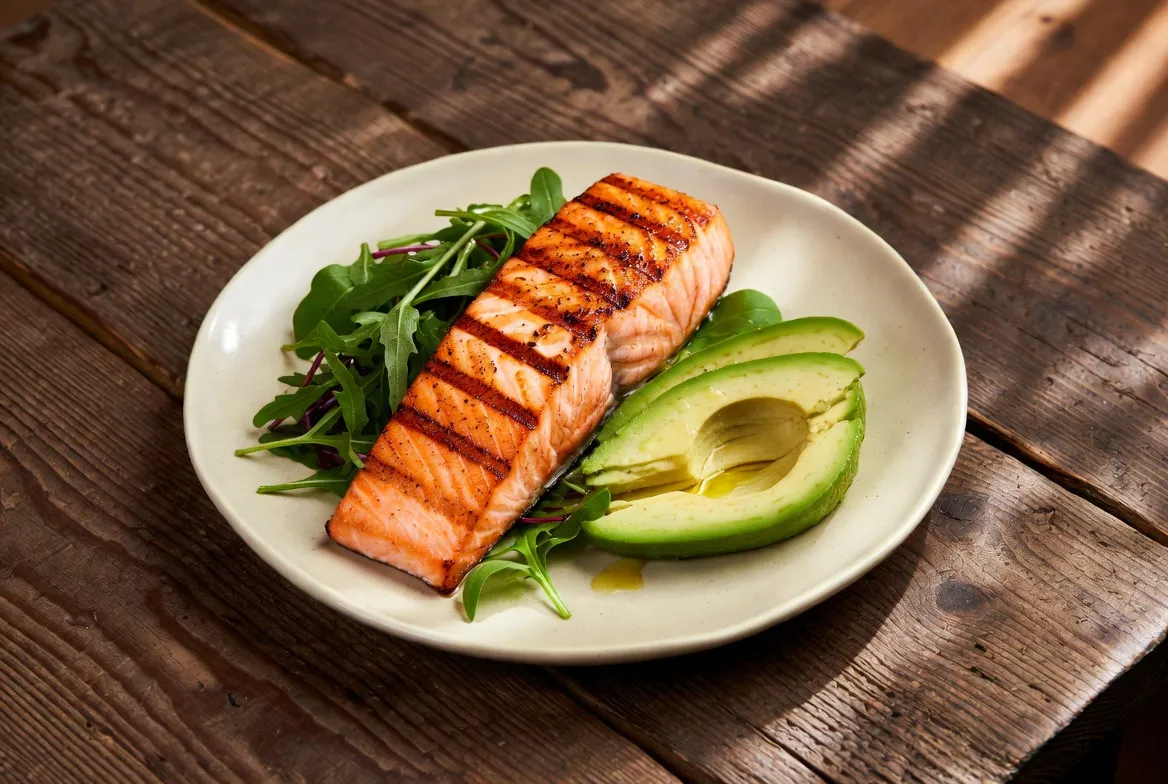
- Embrace Healthy Fats: Do not fear fat! Avocados, olive oil, oily fish (like salmon), nuts, and seeds are essential for hormone production and keep you feeling satiated for hours without spiking your blood sugar.
- Ditch the “White” Carbs: Swap out standard white pasta, white bread, and white rice for fibrous, complex alternatives. If you need a side dish, opt for lentils, chickpeas, or a generous portion of leafy greens.
- Rethink the Snacks: When the 3 p.m. slump hits, step away from the biscuit tin. Swap ultra-processed sweets for a handful of unsalted nuts, olives, or vegetable sticks with hummus. Better yet, try having a peppermint or herbal tea to break the habit cue altogether.
- Consider Muscle-Preserving Supplements: Preserving lean muscle is vital for keeping your metabolism high. A recent 2025 UK study found that adding a daily creatine supplement, combined with regular resistance training, can significantly improve muscle strength, sleep quality, and body composition in both perimenopausal and postmenopausal women.
- Give Your Digestion a Rest: Implement a gentle overnight fast of 12 to 14 hours (e.g., finish dinner by 7:00 p.m. and eat breakfast at 9:00 a.m.). This gives your insulin levels a prolonged period to drop, resting your gut and improving your insulin sensitivity for the next day.
Take Back Control
The menopausal transition is challenging, but it does not mean you have to surrender your health or your waistline. By understanding that your metabolism has fundamentally changed, and by shifting away from outdated diet advice toward a blood-sugar-stabilizing, low-carbohydrate lifestyle, you can successfully navigate this transition.
Ready to make a change? Explore the rest of lowcarb.life for delicious, high-protein, low-carb recipes and practical guides designed specifically to help you thrive through perimenopause, menopause, and beyond.
Works cited
- Menopause Statistics 2025 - the latest facts and stats - Chemist4U, accessed on March 5, 2026, https://www.chemist-4-u.com/guides/female-health/menopause-statistics/
Content is for informational purposes only and does not constitute medical advice. Always consult your GP or a registered healthcare professional before making significant dietary changes, especially if you have a medical condition.